The sector is moving fast. Between climate change, rising input costs and new consumer demands (taste, traceability and sustainability), successful growing is no longer just about producing more, but about producing better.
To help you get your crops ready for 2026, we’ve rounded up 6 farming and horticulture trends that are already reshaping the industry: from living soils to integrating AI and automation into agriculture.
The idea is simple: powerful trends, actionable advice and clear pointers so you can decide what to adopt and when. Whether you tend a small urban garden or manage a professional operation, here you’ll find the keys to more efficient, resilient and sustainable cultivation.
Don’t let innovation catch you off guard. Discover the trends gaining momentum and stay ahead of the curve. Let’s take a look!

Trend 1 — Sustainable urban horticulture: growing close to consumers
Sustainable urban horticulture has gone from a passing fad to a solid trend: “locally grown” is here to stay.
Roofs, patios, vertical gardens, containers, commercial micro-gardens and even community gardens bring production closer to the plate, reduce transport and offer unbeatable freshness and flavour.
Why it matters in 2026
- Space efficiency: container and vertical farming multiply the usable surface area per square metre.
- Resource savings: more precise irrigation, less waste and the possibility of recirculating nutrient solutions.
- Smaller footprint: proximity = fewer kilometres and better traceability.
- Consistent quality: more stable control of irrigation, substrate and nutrition than in open soil.

How to get started (or scale up) without complications
- Choose containers with good drainage and a light, aerated substrate (ideal for terraces).
- Prioritise compact or short-cycle crops (leafy greens, herbs, cherry tomatoes, strawberries, mini peppers).
- Automate the basics: drip irrigation and a simple timer = consistency and fewer mistakes.
- If you make the leap to vertical or indoor growing, add efficient lighting and monitor humidity/EC.
- If you are a producer, certify your local production and use this claim to get better prices and more sales.
ATAMI Tip
- Solid base: Cocos Substrate (light, aerated and pH stable), perfect for balconies and rooftops.
- Life in the substrate: Worm Delight (worm humus) to boost microbiology and vigour.
- Bioactive maintenance: Atazyme (enzymes) helps break down debris and keep the substrate clean and active in successive cycles.

Trend 2 — Plant-based diets and edible gardens
The boom in plant-based diets, where vegetables, fruits and legumes take centre stage, is not just a passing trend, but a deeper movement.
More and more people are cutting down on meat and seeking high-quality produce that is sustainably grown and full of flavour.
The result?
A rising demand for urban gardens, home growing and community projects.
Why it matters in 2026
- Growing demand: the plant-based market continues to expand, and with it the opportunities for growing fresh, local vegetables.
- Home gardens: more families want to ensure they have pesticide-free vegetables that taste better.
- Food education: school and community gardens are driving a connection with real food.
- Crop diversity: from tomatoes to herbs and berries, there’s something for everyone.
How to take advantage of the trend
- Set up an edible garden at home: large pots or growing tables with a mixture of fertile substrate.
- Opt for organic fertilisation: enhance flavour, aroma and quality without compromising soil health.
- Experiment with crop rotation: alternating vegetables and legumes improves natural fertility.
- Incorporate edible flowers: as well as adding colour, they attract pollinators and enhance the gastronomic value.
ATAMI Tip
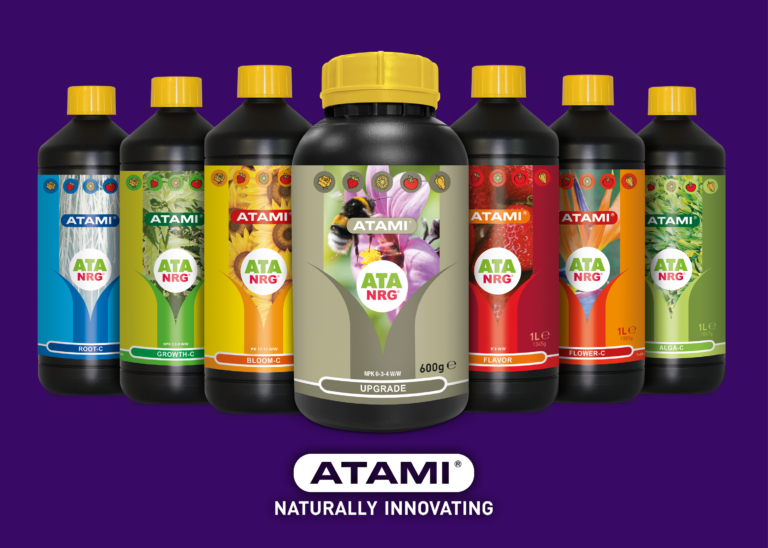
- For a strong garden from the start: ATA NRG Upgrade (slow-release organic fertiliser) keeps the substrate nourished and balanced.
- Liquid boost: the VGN range (100% organic and certified as an input for organic farming) promotes healthy development and consistent, great-tasting production of vegetables, fruits and herbs.
- If you are looking for more flavour and aroma: ATA NRG Flavor intensifies the organoleptic profile of fruit and vegetables.

Trend 3 — Regenerative agriculture and living soils
Trend No. 3 is gaining momentum in the present, but with its sights set on the future: regenerative agriculture.
As its name suggests, regenerative agriculture is not just about producing, but about reviving the soil and keeping it fertile for generations to come. And this is achieved without depleting, unbalancing or degrading the soil we already have. The key to this is living soils.
By 2026, living soils will be one of the foundations of sustainability: active microbiology, earthworms, mycorrhizae and organic matter working together to return to the soil what crops take from it.
If you’d like to learn more about the topic, we suggest checking out this blog, which goes into detail about it.

Why it matters
- It improves the natural fertility of the soil, extends its useful life and increases productivity.
- It increases water retention and resilience to increasingly frequent droughts.
- It supports biodiversity and ecosystem health.
How to apply it to your crop
- Incorporate compost or organic amendments.
• Avoid excessive tillage and protect the soil with plant cover. - Include organic-based fertilisers that nourish both the plant and the soil.
ATAMI Tip
- ATA NRG Upgrade improves soil structure and microbiology thanks to its slow release.
- Worm Delight acts as a soil conditioner and restorer. Combined with VGN, it nourishes the soil and your plants at the same time.
- For an extra boost, Bi-Bloombastic combines pure, powerful minerals with nutrients and organic compounds that respect the life of the substrate.
Trend 4 — Urban and indoor growing
Space is no excuse for not growing.
In cities, indoor and urban growing have become a real movement: from vertical gardens on balconies to hydroponic systems in small flats. It’s not about size, but about using technology to produce fresh, sustainable food on any scale.
Even a small hydroponic system in your kitchen for your herbs works!

Why it matters
- It reduces your transport footprint and environmental impact.
- Allows year-round harvests, regardless of the weather.
- Provides autonomy and fresh produce.
How to apply it to your crop
- Use hydroponic or water recirculation systems.
- Take advantage of full-spectrum LED lighting to replace the sun.
- Control the climate with simple ventilation and humidity equipment.
ATAMI Tip
- B’cuzz Hydro A&B fertilisers are perfect for indoor hydroponic systems, providing balanced nutrition tailored to these systems.
- For intense flowering phases indoors, a bloom booster such as Bloombastic ensures maximum production in small spaces.
Trend 5 — Automated agriculture and artificial intelligence
By 2026, agriculture will no longer be just about sun, water and soil: it will also involve data, sensors, robots and artificial intelligence.
These technologies enable crops to be managed with a precision that was previously unthinkable. They do not replace the farmer’s experience, they enhance it.
Today, we are not just talking about smart irrigation and climate control, we are talking about something that sounded like science fiction just a few years ago: robots.
Drones monitor the air, and sensors detect humidity and nutrients in real time. There are even machines capable of pruning or adjusting parameters on their own. Everything is focused on saving resources, reducing costs and achieving healthier, more productive plants.
And the latest to join this innovation party is, of course, AI.
Artificial intelligence is already being used in pest prediction, nutrient control and image analysis to detect deficiencies before they appear.
Its implementation may be delayed in some places, but it is only a matter of time: the future of agriculture will be smart, automated and sustainable.

Why does it matter?
- It optimises resources: water, space and fertilisers.
- It improves performance through efficiency and automation.
- It helps make decisions based on real data.
How to apply it to your crop
- Install humidity and pH sensors connected to apps.
- Use platforms that integrate climate, irrigation and fertilisation.
- Rely on algorithms that predict pests and adjust strategies before it’s too late.
Trend 6 — Smart pots, air pots and efficient lighting
2026 is also bringing innovation “at ground level”. We are no longer talking about normal pots, but smart pots and air pots, designed to help roots work better and make watering much more efficient.
Smart pots have sensors that measure substrate moisture, adjust watering and can even water themselves thanks to their integrated reservoir.
Air pots, with their perforated design, prevent roots from twisting and promote stronger, more aerated and healthier growth.
Add to this efficient LED lighting and methods such as canopy lighting (top + bottom lighting indoors), and you get more uniform development and high-quality blooms.
Of course, to get the most out of these special pots and efficient lighting, it is best to supplement with nutrients and boosters. Otherwise, it’s like giving the best trainers to an athlete who hasn’t eaten for two days.
Why does it matter?
- It saves water and optimises irrigation.
- Supports stronger, more productive roots.
- Improves flowering quality with less effort.
How to integrate it into your grow
- Use smart pots to automate watering or air pots in your crop to maximise the root system.
- Complement with efficient lighting, not only above, but also in the middle and lower areas of the set-up.
- Adjust nutrition accordingly to achieve maximum potential.
Conclusion: the future of cultivation starts now
2026 is a great opportunity to start preparing your crop for the future.
The incorporation of new technologies, sustainable practices and more efficient solutions is the key to achieving higher quality, more productive and environmentally friendly crops.
It is clear that horticultural trends for 2026 revolve around innovation, but also a return to the essentials: living soils, biofertilisation and conscious resource management. Adopting them today means sowing the seeds of sustainable agriculture that will respond to the challenges of the future.
At Atami, we are already working to connect you with these trends. From our soil amendments to our latest generation of organic fertilisers, we are ready to accompany you every step of the way and help you grow more and better, without losing sight of what matters most: the health of your plants and the planet.