As a first-time grower, you may not be familiar with the best nutrients to feed your plants. Understanding how a plant uses nutrients or how the soil food web works will help you improve your skills as a grower. And as you know, a great growth makes a massive difference to the final quality of your fruits, vegetables, and flowers. In this article, we break down all you need to know to set you on the path of an organic grower, explaining the best Atami products to use, how to correctly water soil, the importance of roots, pH and much more!

Which nutrients do plants need to grow healthy?
Plants require various nutrients throughout their life stages; however, the key primary nutrients will be nitrogen, phosphorus, and potassium (the famous NPK). The following secondary elements and trace elements are also essential: calcium, magnesium, sulphur, zinc, copper, iron, cobalt, molybdenum, manganese, and boron.
How to correctly water pots with soil as an organic grower
One of the most common mistakes a beginner grower can make is to over saturate their soil. This results in a waterlogged medium that roots will find difficult to adapt to. Soil that has become heavy, wet, and poorly aerated may cause root rot and other pathogens and bacteria that infect the soil and ultimately affect the health of the plants.

When it comes to watering your plants with a nutrient solution, it is always best to use a 10% ratio. This simply means if you are using a 10 liter pot, then the volume of plain water or nutrient solution you would feed the soil will be 1 liter.
When watering, you should wait for the growing medium to be closer to the dry and lightweight side of things.
Our Kilomix and Janeco-Light-Mix are created to contain excellent drainage, water retention, air pockets and packed with nutrients readily available from seed until transplanting or harvest.
Mixing nutrients and understanding pH as a first time grower
As a beginner grower, knowing the right amounts to feed your plants at the various stages is easy to achieve thanks to our easy to follow grow guide charts. All the organic and organo-mineral nutrients we produce can be readily absorbed into the soil and utilized by the roots. The term pH refers to potential hydrogen, meaning how much dissolved hydrogen ions are present in the water source, dictating if the water is more acidic or alkaline.
Plants are most able to access nutrients when the pH of the nutrient solution is between 5.5 – 6.5. The best way to check the pH of your water or nutrient solution is to use a digital pH pen, or a paper test, as done with swimming pools. Adjusting the pH level is easy to do and can be done using pH up or down products.
The role of roots and good quality growth
The root zone of a plant is essential to produce healthy, vigorous, and strong growing plants capable of bearing big fruits, vegetables, and buds. The ideal environment for a plant’s root to thrive should be warm, moist, and full of air pockets.

The size of a root system may depend on the size of the pot, so plants should be given the opportunity to develop a prolific root zone during the initial stages of their life. Plants with a small root zone have a limited yield, and the quality of the harvest may also be questionable, especially when growing tomatoes, squash, and other deep-rooted plants.
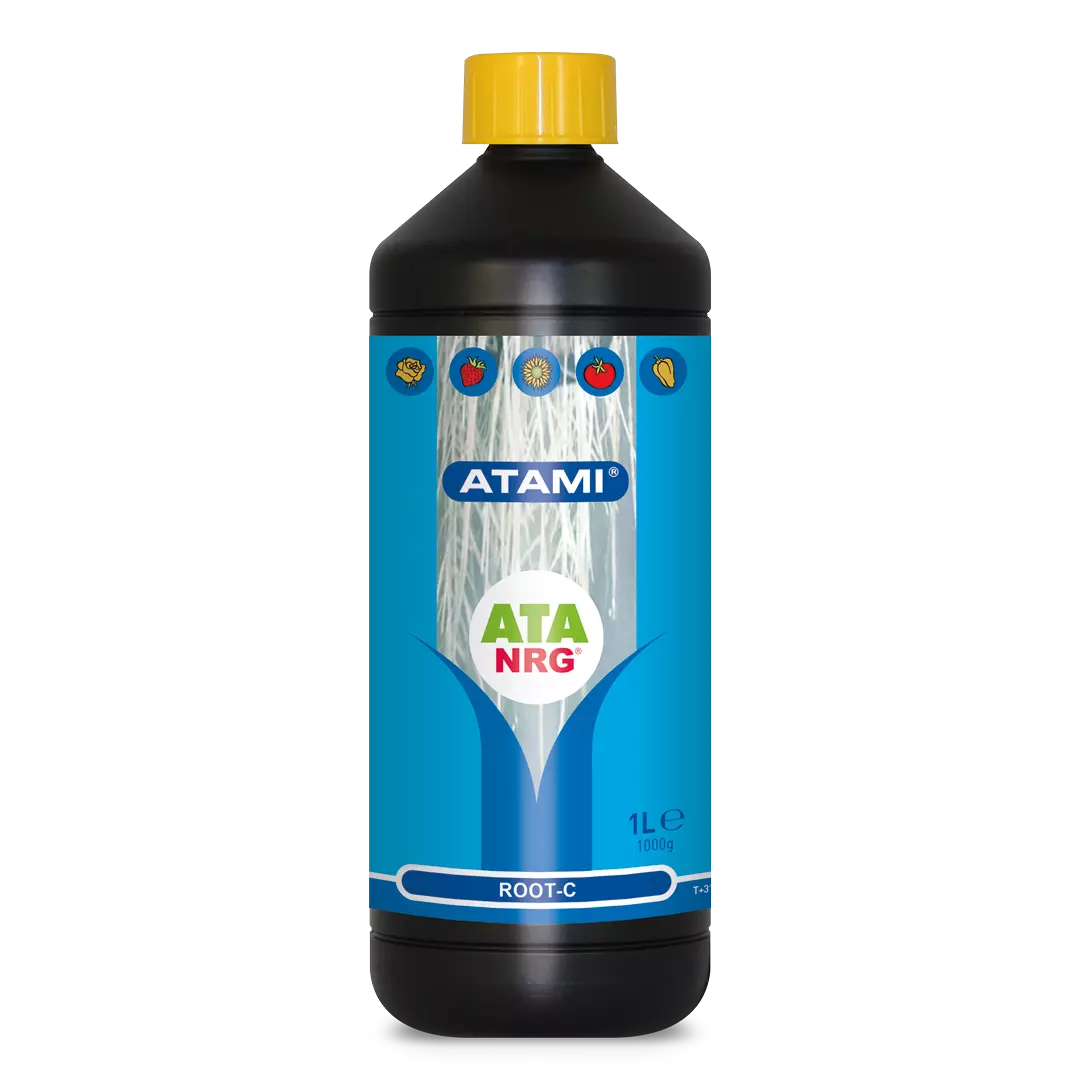
We recommend using ATA NRG Root -C, which as well as helping your roots, it will also give a big boost to soil life, improving the availability and absorption of nutrients. This product contains plant extract and other important compounds such as amino acids and humic substances to really give your roots a boost. Root – C is also perfect for beginners and can be used for a broad range of crops and plants.
● It supports strong and healthy plant development, which makes the plant more resistant to diseases and other stresses – biotic and abiotic – in a natural way.
● Able to support much larger flowers and fruits when harvesting.
● Contains plant extract, amino acids, and humic substances.
● The dosage can be measured to individual plant needs and crops.
● An easy-to-use product that is simple to mix and apply to soil.
What nutrients will be best for growing plants in soil during the vegetative stage?
As a first time grower, deciding to head down the organic route using superior quality soil and hand watering will often produce the best results. Growing using organic and organo-mineral nutrients and soil will also produce the most flavorsome and aromatic final fruit or vegetable. During the vegetative stage, is when plants will focus on producing a large root zone, thick foliage, stems and becoming a healthy shrub and take on a bushy characteristic.
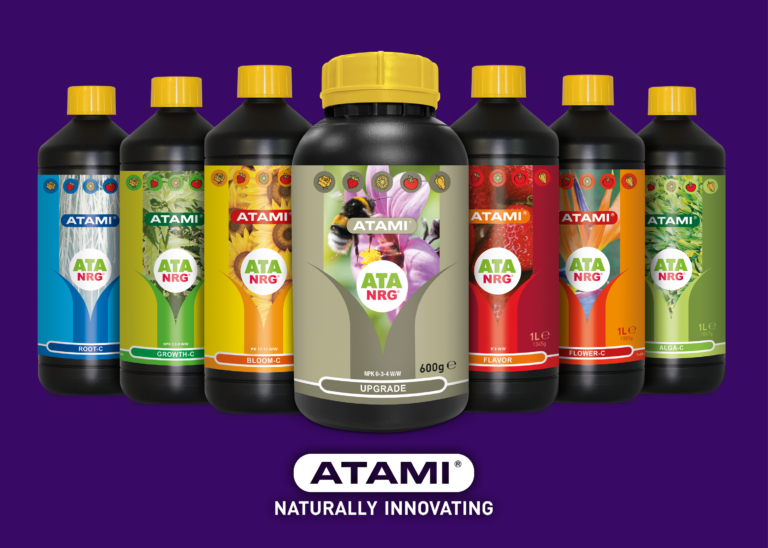
We recommend using our ATA NRG base nutrients which are ATA NRG Growth-C, if you prefer liquid nutrition or ATA NRG Upgrade, if you are more on the side of solid and slow release fertilizers. These products will help you to grow the best quality foliage, stems and overall, a healthy and vigorous growth. For growers who enjoy foliar feeding their plants, we recommend complementing with ATA NRG Alga-C to give their crops extra care. This additive contains vitamins, antioxidants, macro, and micronutrients, all of which help to prevent plant stress and ensure that all your plants’ needs are met.

The best nutrients for a first time grower using soil for flowering plants?
Watching our beloved crops start to flower is one of the most rewarding things in life. It is during this stage our fruits, vegetables, flowers, and buds are, literally, growing in front of our eyes every day. It is essential that during this stage of the plant’s life cycle, there is a readily available supply of phosphorus and potassium fed to the plants at a continuous and consistent rate.
We recommend using, ATA NRG Bloom-C, ATA NRG Flower-C, ATA NRG Flavor, and Bi-Bloombastic, as these products combined will provide the ideal balance of nutrients back to the plants and have the ideal balance ratio of phosphorus, potassium as well as a rich source other important minerals.

● These nutrients will produce the best quality final harvests and yields possible.
● High in P and K these products will support the production of bigger crops.
● The terpenes and aromas will be at their pinnacle using these flowering products.
● Flower production will be massively stimulated resulting in more abundant flowers.
Atami’s conclusion
We hope this article better explains the best nutrients to grow your favorite crops. Knowing the relationship between the plant’s roots, how to correctly water the soil, which nutrients plants require and maintaining quality control will pay off significantly in the long run. You can always add new Atami products to your collection accompanied by our grow guides and continue to take your organic garden to the next level!