One thing I know about organic growers is they like to get their hands dirty, and for those who want to take things up a level, then get ready to make veganic nutrients. This means the only ingredients you need are plant-based, and they will produce a nutrient- and microbial-rich tonic for your plants!
This article explains what veganic nutrients are, how to make your own, different veganic nutrient recipes, and the benefits of building a vegan compost cannabis system. It compares DIY veganic fertiliser for cannabis to store-bought.
What Are Veganic Nutrients and Why Cannabis Growers Use Them?
For the longest time, the only options growers had, were very organic or synthetic nutrients. Now, with the rise in popularity of veganic nutrients, growers can benefit from plant-based fertilisers and even learn to make their own homemade veganic nutrients! Below explains the principles of growing using veganic nutrients, the benefits associated and why green conscious growers are moving away from organics.
Understanding the Principles of Veganic Growing
- Veganic nutrients are made from 100% plant derived materials
- Zero animal byproducts, such as guano, are used
- Homemade veganic nutrients are rich in nutrients and amino acids
- Fermented plant extracts feed microbiology in the soil
- Vegan growing is environmentally friendly and allows soil to be recycled
- Cultivation practices with plant-based and sustainability values
Benefits of Plant-Based Nutrition for Cannabis Plants
- Veganic nutrients stimulate beneficial microorganisms and bacteria
- Veganic nutrients provide a high level of directly plant-available nutrients
- Growers experience cleaner development, improved aroma and flavour
- Growers experience more consistent results without forcing growth
- Reduced product waste
- More efficient nutrient use
- Fewer corrective treatments
- Lower risk of crop setbacks due to imbalance
- Respond faster to nutrient imbalances or deficiencies
- Spend less time troubleshooting feeding issues
- Avoid long waiting periods for nutrients to become available
Why Many Growers Are Moving Away From Animal-Based Inputs
Growers love the simplicity and ease of using veganic nutrients. They find that veganic nutrients are far more beneficial for supercharging soil and creating optimal nutrient uptake and availability for plants.
How to Make Homemade Veganic Nutrients for Cannabis
One of the joys of growing organically was getting your hands dirty in the soil and making aerated teas, cold-water extracts, and fermentations. If you like the idea of a DIY plant-based fertiliser recipe, then below breaks down the essential ingredients required, creating a simple plant-based fertiliser recipe at home and common mistakes to avoid when making your own veganic nutrients from scratch.
Essential Ingredients for a Plant-Based Nutrient Mix
If you enjoy getting hands-on with your nutrients, then making DIY veganic nutrients is perfect for you. You will need to ensure you cover all the nutrients a plant needs throughout its lifecycle.
Plant-Based Fertiliser Recipe Ingredients List
Here is a list of all the different ingredients you can use when creating your own veganic nutrients
Nitrogen Inputs:
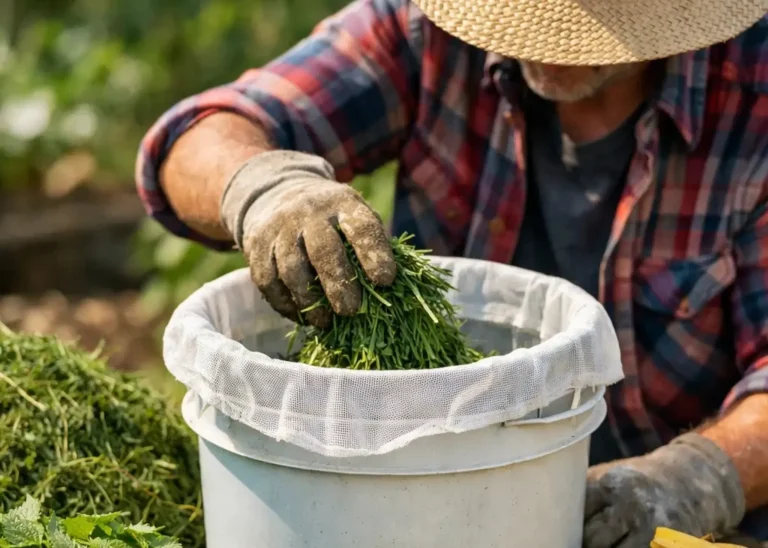
- Fresh grass clippings
- Alfalfa meal
- Cottonseed meal
- Nettles
- Comfry
Phosphorus Inputs:
- Bean Husks
- Compost
Potassium Inputs:
- Banana Peels
- Kelp/seaweed
Creating a Simple Plant-Based Fertiliser Recipe at Home
If you want to make a simple plant-based fertiliser recipe at home, then all you need to get started is a tea brewing kit. This is the same kit you would use to make an aerated compost tea. Below is a list of all the tools and equipment you need. You will need to use dechlorinated water and leave the tea to brew for at least 48 hours before feeding your plants.
- Plastic bucket
- Air pump
- Air stone
- Straining bag
Common Mistakes When Making DIY Veganic Nutrients
It may seem enough to make your own aerated compost teas or ferments; however, mistakes can still occur. Below are the most common mistakes to avoid when creating your own plant-based fertiliser recipe at home.
Rotten plant material
When collecting fresh plant material or using compost from your garden, double-check that the plant material has not begun to rot. Avoid using materials that appear mushy, rotten, or have a bad smell.
Signs of mould
Mould spores can appear as tiny black or dark brown dots that may not be visible to the untrained eye. Adding mouldy plant matter to your tea or ferments will disrupt the balance between good and bad bacteria and is not safe to give to your plants.
Short brew times
Fermenting plant matter can be a long-winded process, so the quick alternative is to make a DIY veganic cannabis fertiliser using aerated tea. Brew times should be at least 48 hours to give aerobic bacteria and fungi a chance to multiply into the billions.
DIY Veganic Fertiliser Cannabis Methods and Recipes
Veganic nutrients are easy to make and go a long way in your garden. Many cultures around the world have known for thousands of years about the benefits of using plant-based nutrients and fermentation. Below, we explain why fermented plant extracts are a great way to support optimal growth and vitality, and how to make nutrient-rich teas from plant-based materials.
Using Fermented Plant Extracts for Cannabis Growth
- Fermented extracts require 7-21 days before they can be used
- They are rich in nutrients, microbes, and plant growth hormones
- Ferments are a key part of Korean Natural Farming (KNF)
Making Nutrient Teas From Plant Materials
A tea is basically an extract that has been aerated, causing the helpful bacteria and fungi present to multiply from millions to billions. It is the dissolved oxygen created by the pump which is the key to making a super tonic for plants and the soil.
Cost, Effort, and Consistency of DIY Veganic Fertilisers
The benefits of making your own veganic nutrients at home extend from saving money to becoming more sustainable. Making DIY veganic nutrients at home is a great way to recycle plant matter, create a compost cannabis system and work with only fresh plant materials. They also allow plants optimal nutrient availability and prevent nutrient burn.
Building a Vegan Compost Cannabis System for Natural Nutrition
Many growers enjoy making their own nutrients using garden compost or food waste. Building a vegan compost cannabis system is highly sustainable. It means you will never need to pay for store-bought nutrients again!
Below covers the best plant materials for home veganic composting, how compost improves soil health and nutrient availability, and when to use compost when growing cannabis.
How Compost Improves Soil Health and Nutrient Availability
There is nothing better for cannabis plants than fresh soil teeming with microbes, fungi, and slow-release nutrients. Creating a compost bin at home is the start of producing your own top-quality compost that can be mixed into soil, used as an aerated tea, or added to a fermentation.
When to Use Compost in a Cannabis Feeding Program
Compost is an excellent organic input that slowly leeches nutrients into the soil. Compost is rich in calcium and magnesium and, when added to soil or used as a top dressing, can restore plant health and vitality and correct nutrient deficiencies.
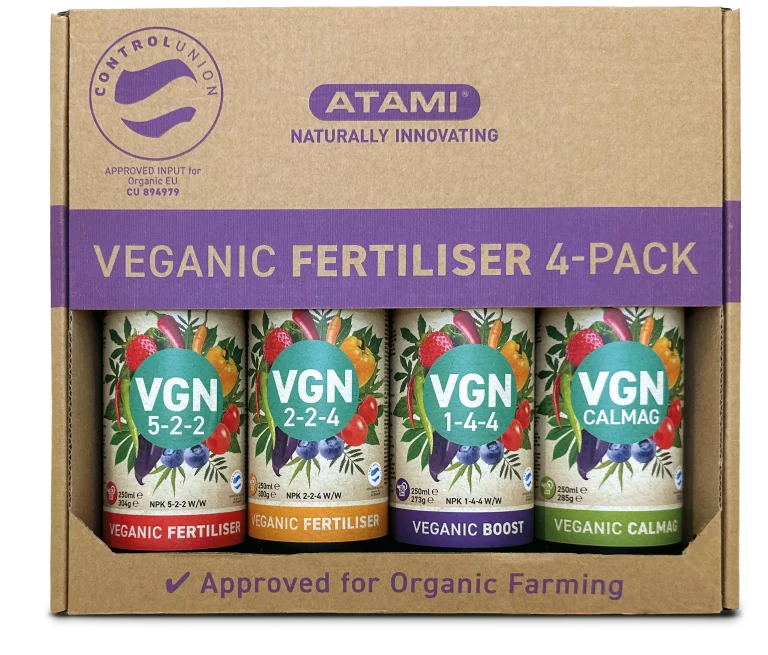
So, Why Choose Atami VGN Over Organic Nutrients?
Fully Veganic Plant-Based Formulation
- VGN is made exclusively from residual plant matter and contains no animal-derived inputs
- Many competing “organic” fertilisers still rely on animal by-products or blended organic sources.
- Plant-based, veganic system aligned with ethical and sustainability-focused principles.
High Proportion of Directly Plant-Available Nutrients
- Many organic fertilisers depend primarily on slow mineralisation processes
- VGN provides nutrients in directly plant-available forms.
- Faster nutrient uptake and a quicker response when correcting imbalances or deficiencies
Modern Biodegradable Chelation (IDHA)
- VGN uses environmentally friendly biodegradable chelating agents (IDHA)
- Supports nutrient efficiency without leaving harmful residues
Nitrogen-Free Calcium & Magnesium (VGN CalMag)
- VGN includes a nitrogen-free CalMag
- Plants are supplied with calcium and magnesium, but not with additional nitrogen.
- CalMag products include nitrogen, which can be undesirable during the flowering stage
- VGN provides greater control during sensitive phases.
Structured 4-Bottle System
- VGN is designed as a coordinated, easy-to-use 4-bottle nutrient system with defined ratios
- A food chart is provided for all stages, supported by a detailed grow guide.
- VGN provides growers with a complete, balanced system that maintains consistency
Certification & Sustainability Credentials
- VGN is approved as an input for organic farming by Control Union
- VGN is produced using residual plant matter with recycled packaging
- Transparency and sustainability reassurance beyond marketing claims