As an indoor cultivator, cannabis growing problems can occur at any point. Veganic cannabis problems arise when there is a nutrient imbalance, bad soil health, root problems, watering and nutrient issues or environmental issues.
In this article, I will cover all you need to know about veganic cannabis problems. Understanding common veganic cannabis problems, how to diagnose cannabis plant problems through leaves, restoring and preventing future veganic cannabis deficiencies, and avoiding common cannabis mistakes to ensure no more future veganic cannabis problems
Understanding Common Veganic Cannabis Problems
Cannabis growing problems can easily arise and understanding veganic cannabis problems and knowing how to identify them in advance will be advantageous. Veganic nutrient issues can affect plant growth, and flower production and yield
Below is a breakdown of why veganic growing requires a different approach to conventional feeding programs, the most common challenges new growers face, and how to identify veganic cannabis problems before they affect growth.
Why Veganic Growing Requires a Different Approach
- Nutrient systems that are hard to understand or manage
- Products that rely on animal by-products without clear transparency
- Difficulty maintaining balanced nutrition during different growth stages
- Limited control over nitrogen levels, especially during sensitive phases
ATAMI VGN addresses these challenges by providing a simple, plant-based (veganic) nutrient
system with clearly defined components, including a nitrogen-free Cal-Mag option. This allows
growers to support plant health while maintaining control, consistency, and alignment with their
values. In short, ATAMI VGN removes guesswork and unwanted inputs from plant nutrition, making clean, responsible growing more accessible and reliable.
The Most Common Causes of Veganic Cannabis Problems
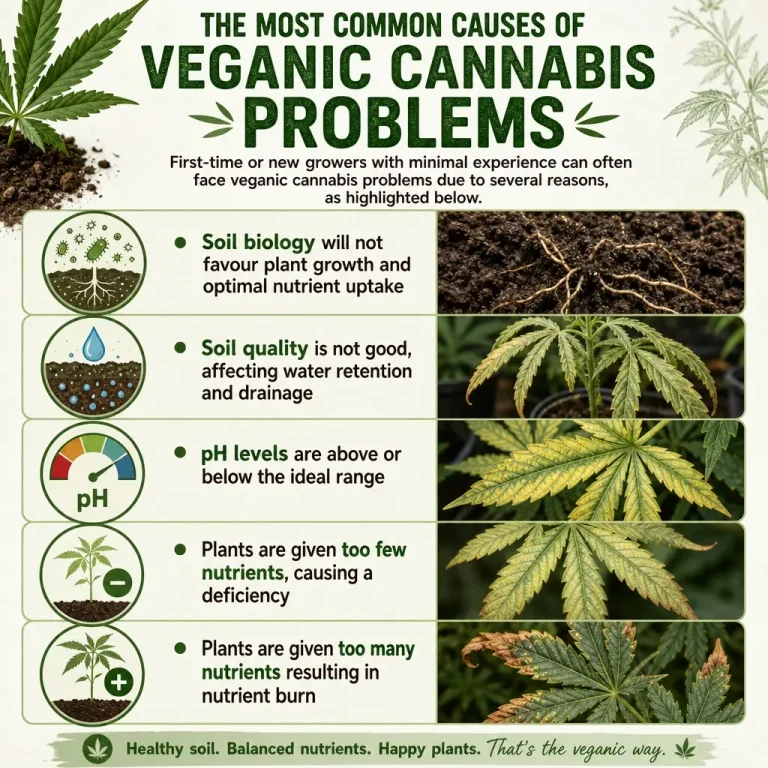
First-time or new growers with minimal experience can often face veganic cannabis problems due to several reasons, as highlighted below.
- Soil biology will not favour plant growth and optimal nutrient uptake
- Soil quality is not good, affecting water retention and drainage
- pH levels are above or below the ideal range
- Plants are given too few nutrients, causing a deficiency
- Plants are given too many nutrients resulting in nutrient burn
How to Identify Problems Before They Affect Growth
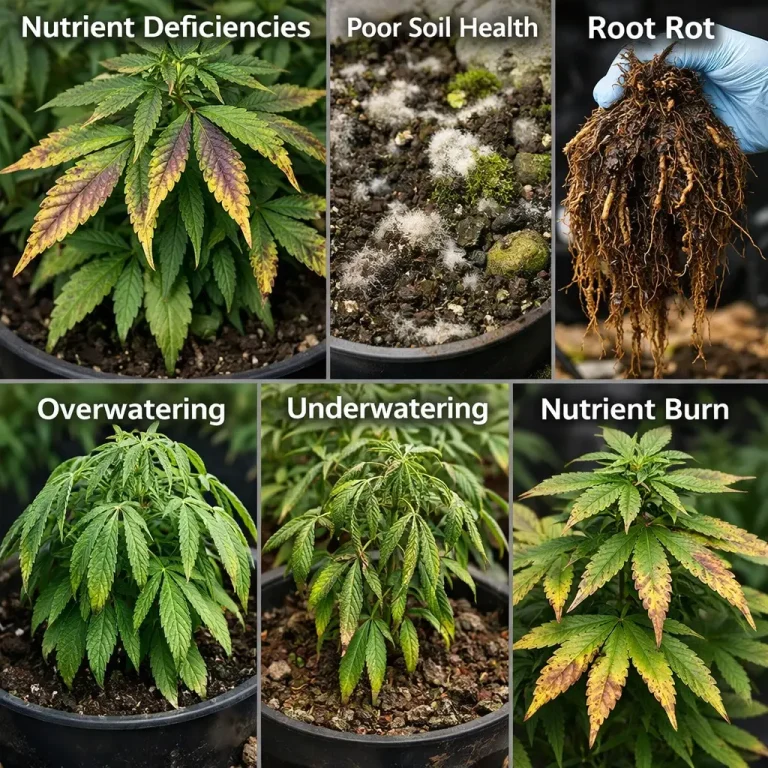
The more familiar you are with your cannabis plants, the easier it will be to identify any veganic nutrient issues or watering-related issues.
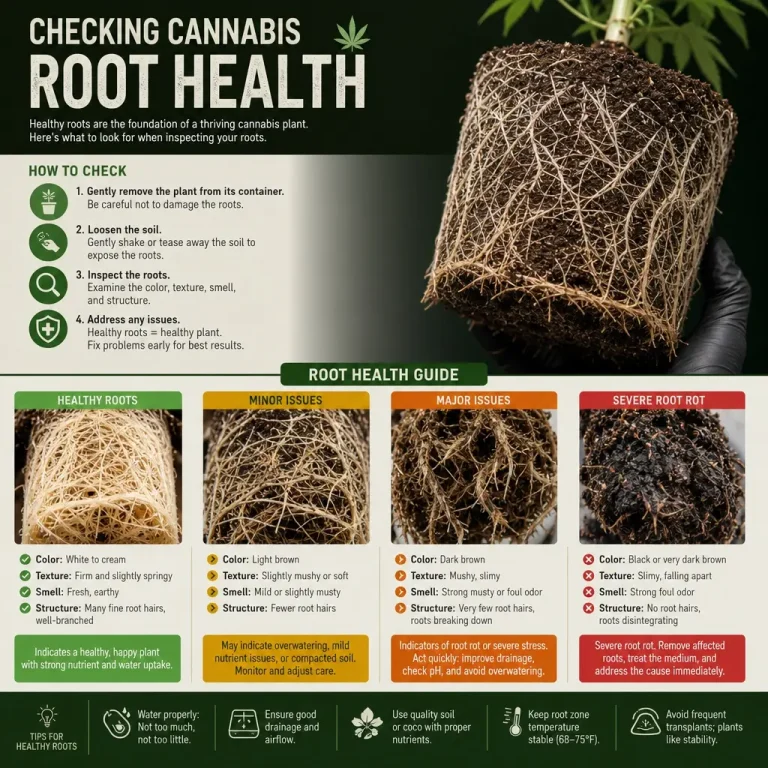
- Check root health to check if the roots have a pathogen such as root rot
- Monitor the colour of the foliage daily
- Check if your plants are wilting due to under- or overwatering
Diagnosing Cannabis Plant Problems Through Leaf Symptoms
Cannabis plant problems and leaves are related, and your leaves will be able to help you diagnose any potential veganic cannabis problems. By examining the cannabis leaf symptoms, you will be able to prevent any veganic nutrient issues and ensure full health and vitality.
The following explains what discoloured, curling and spotted leaves can indicate, how to differentiate between nutrient issues and environmental stress, and when cannabis plants’ leaves can indicate a serious issue.
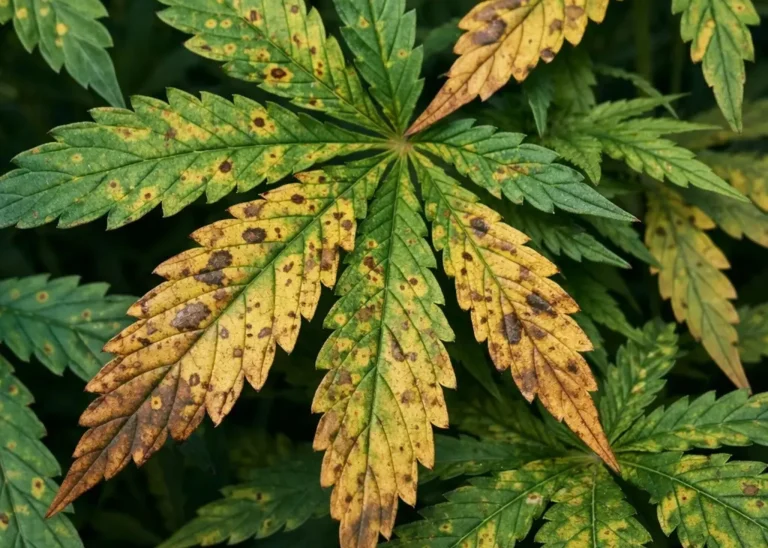
What Discoloured, Curling and Spotted Leaves Can Indicate
There will be times when growing cannabis, when you eagerly open your grow tent, to find your once perfectly happy plant leaves appear discoloured, curling or have spotted leaves. There is no need to panic; diagnosing the cause is easy enough.
Leaf Discolouration
- Yellowing leaves are a cause of a nitrogen deficiency, which is common during 12/12
- There may be a pH-related problem resulting in a cannabis nutrient lockout
- Overly dark green with a metallic shine is a sign of too much nitrogen
Curling Leaves
- Leaves that wilt and claw downwards can be a sign of under- or overwatering
- Too much nitrogen can cause the leaf tips to claw
- Heat stress and wind burn will cause the leaflets to curl and twist
- Wilting and clawed leaves can indicate a pH nutrient lockout
- There may be an insect problem, such as aphids
Spotted Leaves
- Silver or bronze speckles on the leaf surface are a sign of spider mites
- Plants may be suffering from a calcium and magnesium deficiency
- The dots may be caused by an airborne fungus like Septoria
- White dots may be caused by nutrient solution residue after spraying
Differentiating Between Nutrient Issues and Environmental Stress
It is important not to confuse a nutrient-related issue with environmental stress. Below is a list of the different types of environmental stress and how to avoid them:
- Lights that are too close or have too much PPFD will cause light burn
- High temperatures will cause plants to dry out faster and wilt
- High humidity can cause colas to become mouldy during flowering
- Poor aeration and ventilation cause stagnant air and wilting plants
- Cold temperatures will stunt plants, causing wilting and slow growth
When Cannabis Plant Problems Leave Signal a Serious Issue
If you do not act in time and allow a cannabis nutrient deficiency to get worse, you may find out it is more serious than you originally suspected. Below are the signs that your leaves are letting you know there are potentially serious issues incoming.
- Powdery mildew will create a white powdery layer on the leaf surface
- A bad spider mite problem will create tiny silver and bronze speckles on the leaves
- Leaves that become brown and soft and wilt during bloom will have mould
- If all of the leaves on your plant are mostly yellow and brittle
Solving Veganic Nutrient Issues and Cannabis Deficiencies
Veganic cannabis problems can be easily solved if you know what to look out for. Whilst veganic cannabis growing is one of the easiest ways to grow amazing crops, there are times when common cannabis deficiencies can occur.
Below are common veganic nutrient issues, how to restore nutrient balance correctly without overfeeding, and how to prevent future nutrient problems with healthy soil biology.
Common Cannabis Deficiencies in Veganic Growing
- pH imbalances result in a nutrient lockout, starving plants of available nutrients
- Poor quality soil with bad drainage will promote unhealthy soil
Restoring Nutrient Balance Without Overfeeding
In the same way that growing with organics is an easy and forgiving way to cultivate cannabis, veganics goes even further! You can restore your soil and nutrient balance with a few different methods as explained below:
- Organic compost tea using plant extracts supercharges old, depleted soil
- Top dressing using Worm Delight and compost works great
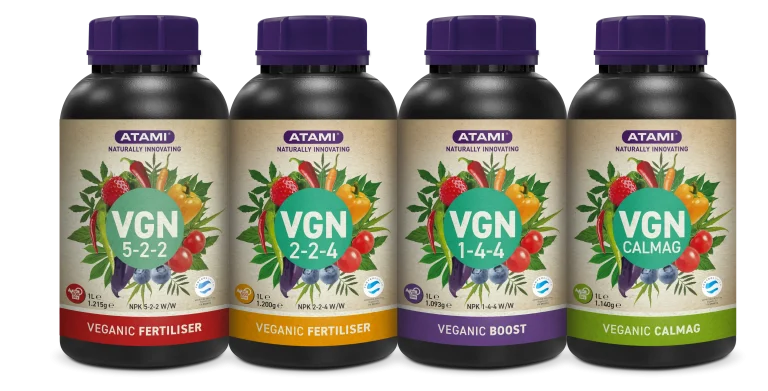
- Use the Atami VGN feeding chart as a guide when making nutrients
Preventing Future Nutrient Problems with Healthy Soil Biology
The more you learn about the soil food web, the more you will understand the importance of healthy soil biology. Beneficial microorganisms present in healthy soil form a symbiotic relationship with the roots of your plants.
- Healthy soil biology allows optimal nutrient uptake and availability
- The root hairs expand in size, allowing them to absorb more moisture
- A healthy balance of beneficial bacteria and fungi protects against diseases
- Plants can use more nutrients when a symbiotic relationship is formed
Avoiding Common Cannabis Mistakes for Healthier Plants
If you are a first-time or beginner-level grower, then there is a good chance you will make common cannabis growing mistakes that affect plant health. Cannabis growing problems can occur during any stage of a cannabis plant’s lifecycle, and avoiding them will make life as easy and stress-free as possible!
Below are highlights of the most common cannabis mistakes that cause veganic cannabis problems, such as overwatering, underwatering and root zone problems, environmental issues such as light, temperature and humidity, as well as the best practices to prevent recurring cannabis growing problems.
Overwatering, Underwatering and Root Zone Problems
As a beginner grower, working out exactly how much water your plants need can be tricky, especially as they grow bigger and demand more. The roots will be affected if the soil is oversaturated and waterlogged, or too dry.
- Overwatering creates a low-oxygen environment and harmful bacteria
- Soggy and heavy soil will restrict expansive root growth
- Stagnant water will produce aerobic bacteria, creating a bad smell
- The roots of your plants can become affected with root rot
Managing Light, Temperature and Humidity Effectively
Your growing environment will play a crucial role in how well your plants grow and flower.
- Keep the grow light 18-24 inches above the top of the canopy
- The temperature should consistently be 24 degrees with the lights on
- Use a digital hygrometer to monitor the humidity levels
- A dehumidifier will reduce the moisture levels inside the grow room
- A humidifier is an easy way to increase humidity levels
My Final Thoughts
Veganic cannabis problems may quickly arise; however, with the right knowledge, you will be able to amend them to restore plant health. Veganic nutrient issues can usually be solved by monitoring your plants’ leaves for the different signs and symptoms explained in the article.
Soil biology plays a huge role in nutrient uptake and availability, so ensuring your soil quality and feeding regime are optimal is key to healthy, happy crops capable of big yields.