Cannabis plants require nutrients during their lifecycle to grow; however, cannabis over-fertilization or under-fertilization can easily occur. Cannabis plants require nutrients to become healthy and robust plants capable of growing strong roots, stems, leaves, and beautiful buds.
In this article, I explain all you need to know about over and underfed cannabis plants, covering the signs of over-fertilizing cannabis, the signs of underfed cannabis plants, the effect on cannabis buds, the best methods to help prevent over-fertilizing and under-fertilizing cannabis, as well as provide my top tips to help you find the perfect balance between over and underfed cannabis plants.

Table of contents:
● What Does Over-Fertilized Cannabis Mean?
● Signs of Over-Fertilizing Cannabis
● Over-Fertilized Cannabis Buds
● Signs of Underfed Cannabis Plants
● Tools and Equipment to fix and prevent over-fertilization
● 3 Top Tips to Avoid Over-Fertilizing and Under-Fertilizing Cannabis Plants
● The Conclusion on Underfed and Over-Fertilized Cannabis
What Does Over-Fertilized Cannabis Mean?
There are three nutrient groups cannabis plants need from seed until harvest, and they are the primary nutrients, the secondary nutrients, and the trace elements. When too many nutrients are applied, over-fertilization of cannabis or nutrient toxicity will occur, resulting in an overfed cannabis plant causing an imbalance in plant health. Over-fertilization is an excess of salt accumulation in the metabolism of the plants as advised by Alchimia.
Signs of Over-Fertilizing Cannabis
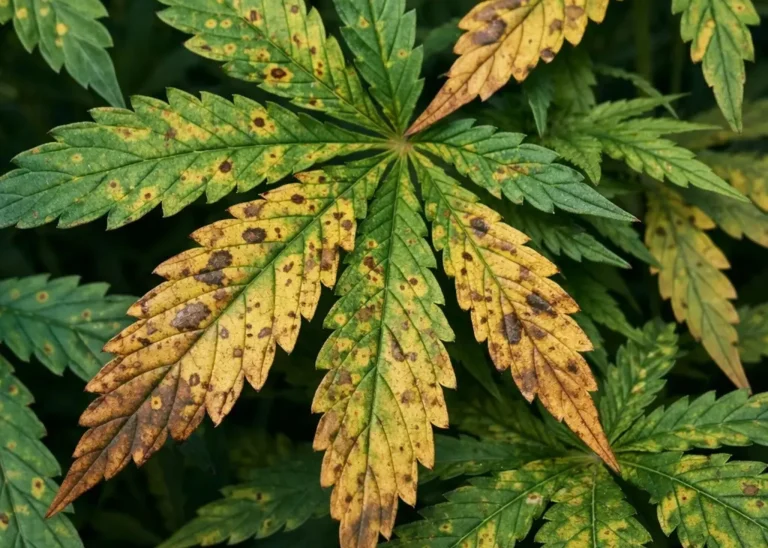
● Too much nitrogen will cause the leaves to bend or curl.
● The plants will become very dark green and dark-coloured.
● The tips of the leaves will become yellow, bronze, or brown, indicating tip burn.
● The rate of growth will become slow and can result in stunted plants.
● A cannabis plant’s roots will become strained brown or dark yellow.
● Nutrient salt buildup will accumulate in the grow medium resulting in high E.C levels.
● The run-off E.C level will be greater than the E.C level of the nutrient solution
Over-Fertilized Cannabis Buds
As a home grower, the goal is to try and grow the same quality buds that you would experience in a Spanish cannabis social club or Dutch coffee shop. How many nutrients your plants receive can seriously affect the smoking experience. Below are the signs cannabis buds have become over-fertilized, contain PGR nutrients, and what to look out for.
● The joint will not light easily, and the ember may not burn correctly.
● When inhaling, the joint feels tight and the paper will side-burn the more you smoke.
● The ash from the joint will have a charcoal black and dense characteristic.
● The aroma of the joint will have a chemical and unpleasant smell.
● Inhalation will result in a harsh taste and can cause you to dramatically cough.
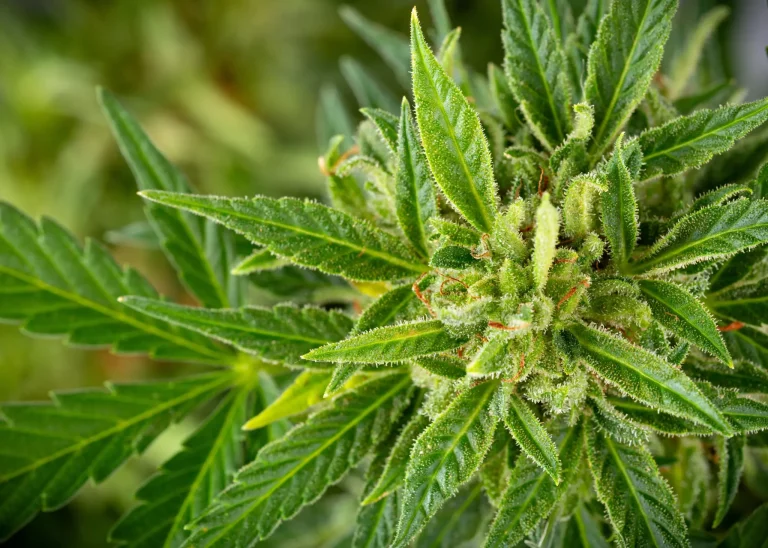
● The buds may have a dark appearance and may contain small dark green leaves.
Signs of Underfed Cannabis Plants
Underfed cannabis simply means that the plants are not getting enough nutrition. As a beginner-level grower, a common mistake that can be made is to under-fertilize your crop. Whilst this problem can be easily fixed, an underfed cannabis plant will still harm plant growth, health, vitality, terpene production, and resin production and ultimately result in a loss in yield. Below are the signs of underfed cannabis plants, and what to look out for.
● Nitrogen-deficient plants will turn their leaves yellow and become brittle.
● Plant foliage will feel paper thin and lack vitality and a shiny appearance.
● The stems of a cannabis plant will become purple and in some cases red.
● There will be bronze spots at the edge of the leaves.
● The tips of leaves can become brittle and dry with a bronze discolouration.
● Growth can significantly decrease, and flower production will also suffer.

Tools and Equipment to fix and prevent over-fertilization
The next thing to be aware of is the correct ways to fix the issue. Below are three ways you can help prevent and solve the issue of under-fertilized and over-fertilized cannabis plants
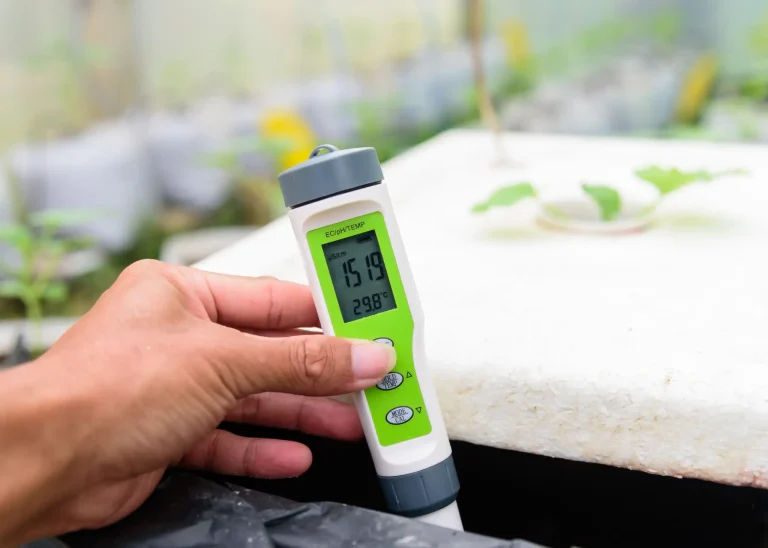
1. Using an E.C pen
E.C refers to the electric conductivity of your nutrient solution, and means how much salt content is present. A digital pen is the best way to check each time you make a nutrient solution or test the run-off for the exact levels. Using an E.C pen is advised for testing hard and soft water and when purchasing new, E.C pens will need to be calibrated and should always be kept clean and sterile.

2. Flushing your plants with plain water and enzymes
If you have an over-fed cannabis plant and have caused a high level of salt build up around the roots and inside the growing medium, then flushing with plain water and Atazyme is required. You may think that flushing should only be done during the final weeks of flowering, however, it is the most practical way to control the amount of undissolved salts present in the growing medium.
Enzymes will break down nutrients much faster and also clean the roots, and flushing an over fed cannabis plant for 2–3 times over a week will help you restore an over-fertilized cannabis plant, before it is safe again to continue feeding with a lower nutrient solution E.C.
3. Reducing the amount of nutrients
Once you have given an over-fertilized plant only plain water and Atazyme, your plants will be ready for nutrients, however, to avoid over-fertilization, use only 25% or 50% of the original nutrient measurement. The reason is to allow the plants to gradually bounce back and use up the available nutrients, without the concern of high salt levels building up again, resulting in an over-fertilization issue later down the line.
4. Check the run-off at the base of the pots
The run-off refers to part of the nutrient solution that exits from the base of the pot. Checking the E.C levels using a digital E.C pen will allow you to see if the amount is less or greater than the starting E.C nutrient solution amount.
For example, if you are flowering a cannabis plant and use an E.C of 1.8, and the run-off is testing at 2.8, then this is a clear sign the growing medium has too much salt inside, causing the run-off E.C to spike.
3 Top Tips to Avoid Over-Fertilizing and Under-Fertilizing Cannabis Plants
Over-fertilized cannabis plants can really set a beginner grower back, and if the problem is not resolved, can dramatically affect the outcome of the grow. Below are my top tips to consider preventing an under or over-fed cannabis plant and to grow the smoothest and best looking and tasting buds possible.
Tip #1: ATAzyme for the win
Atazyme is an excellent way to provide enzymes with your nutrient solution. Not only will adding enzymes help break down nutrients and salts faster, but roots will appear a shiny and healthy white colour. I love using enzymes especially during the final two weeks at a rate of 20 ml per liter for the cleanest tasting cannabis buds!

Tip #2: Check the leaves and stems for visual signs
Always check your plants for visual signs each day, as this will help you see if your plant is nutrient deficient or over-fertilized. Doing so will also let you become more familiar with different stains and which can handle nutrients better than others. Using cannabis leaf symptoms to help diagnose environmental or climatic stress will provide optimal growth, overall plant health, and the best chance of huge yields, as advised by M.S.N.L.

Tip #3: Worm Delight for increased Nitrogen and plant vitality
When a cannabis plant is underfed or overfed and there is a shortage of nitrogen, the plants will use the available nitrogen from other leaves. This results in the lower fan leaves becoming light yellow and taking on a lifeless appearance. The bigger the plants grow without nitrogen, the more leaves will become sacrificed, turn yellow and eventually brittle and weak.
Increase nitrogen levels by adding a top dressing of Worm Delight to the top layer of your pots to provide a rich source of slow release nitrogen, beneficial bacteria and amino acids.
The Conclusion on Underfed and Over-Fertilized Cannabis
Finding the right balance of nutrients to feed your plants during their lifecycle, will be the key to success, prevent over-fed plants and ensure you harvests cup winning quality buds. Always be vigilant and check the leaf symptoms to quickly diagnose any issues before they become a problem, and remember to combine ATAzyme with every feed to enhance nutrient uptake and availability.
Often less is more when it comes to watering and feeding cannabis, and keeping a digital E.C pen close by will give you the advantage you need. Good luck in becoming a master of troubleshooting under-fertilized, over-fertilized cannabis, learning which plants can take large amounts of nutrients, and maintaining optimal plant health, vigour, and growing the best yields.