Cannabis plants require light, carbon dioxide and nutrients to grow into robust and healthy plants. A cannabis nutrient deficiency can occur for several reasons, so in this article, I will explain all you need to know about a cannabis nutrient deficiency, how to identify cannabis leaf symptoms, using a cannabis nutrient deficiency chart, the most common deficiencies, and how to prevent a cannabis nutrient deficiency.
Understanding Cannabis Nutrient Deficiency in Veganic Growing
A cannabis nutrient deficiency can affect growth and development, causing plants to become weaker and produce lower yields. As a beginner grower, it’s easy to make a mistake when feeding. Within a short time, you notice the cannabis leaf symptoms are starting to show. Below is a breakdown of why cannabis nutrient deficiencies occur, how nutrient availability and presence differ, and the early warning signs of a cannabis nutrient deficiency.
Why Nutrient Deficiencies Occur in Veganic Systems
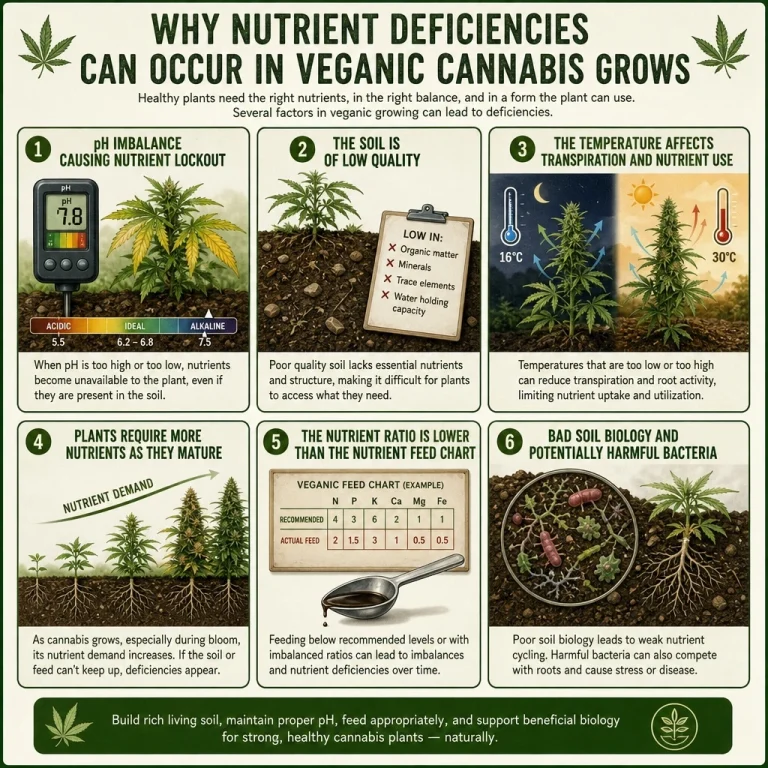
There can be several reasons why nutrient deficiencies can occur when growing cannabis using veganic methods, as listed below:
- pH imbalance causing nutrient lockout
- The soil is of low quality
- The temperature affects transpiration and nutrient use
- Plants require more nutrients as they mature
- The nutrient ratio is lower than the nutrient feed chart
- Bad soil biology and potentially harmful bacteria
How Nutrient Availability Differs from Nutrient Presence
One of the most confusing times for a grower is when they experience a nutrient deficiency despite having plenty of available nutrients in the soil for the roots to use. This is because nutrient availability and presence are two different things
- Nutrient uptake is determined by the correct pH level for soil or hydroponics
- Nutrient presence refers to the amount of hard food or liquid nutrient present
- Cannabis plants require a nutrient solution pH level between 6.0 and 7.0 for veganics
Early Warning Signs of Cannabis Nutrient Deficiency
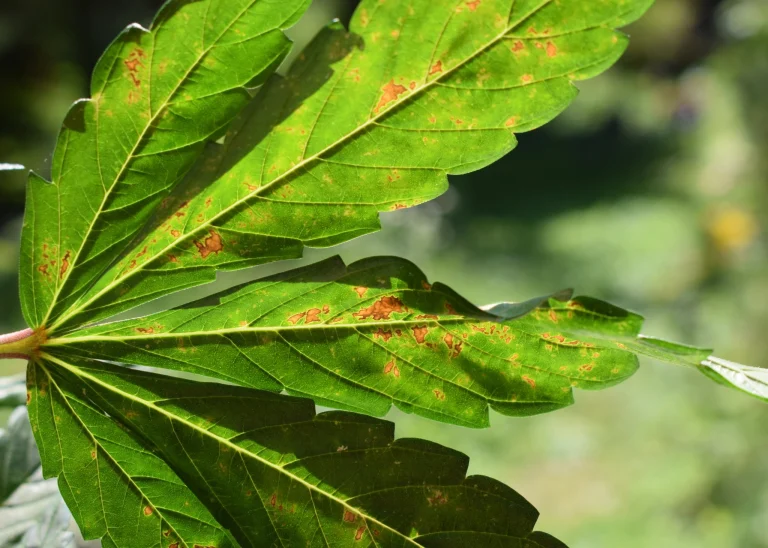
A cannabis nutrient deficiency can happen within days. Before you know it, your plant’s leaves appear discoloured, may contain spots or crispy dark edges, and possibly wilt. Being able to identify a potential nutrient deficiency early has major advantages for maintaining perfect health and development.
- Examine the foliage daily to see if the leaves are becoming pale or too dark
- Check the colour of the stems to see if they are purple or red
- Cannabis plants will use nitrogen from older leaves first if deficient
- Add a top dressing of worm castings and compost to resolve
Identifying Cannabis Leaf Symptoms and Deficiency Signs
One way to know if your plants are short on nutrients or if there is some cannabis nutrient deficiency is by identifying cannabis leaf symptoms. Your plants will tell you all you need to know. Below covers how to read cannabis leaf symptoms accurately, how using a cannabis deficiency chart for diagnosis is well recommended and how to distinguish nutrient deficiencies from environmental plant stress.
How to Read Cannabis Leaf Symptoms Accurately
When you are examining the foliage of your cannabis plants to accurately check every aspect, you should do the following:
- Check for yellowing of older leaves
- Check between the veins of the leaves
- Check for overly dark green metallic leaves
- Check the edges and sides of the leaves
- Check for brown patches or spots on the leaves
- Check for signs of insect damage or sap marks
- Check to see if the leaf is wilting
- Check to see if the leaves feel thin and brittle
- Check to see if leaves are curling inwards
Using a Cannabis Deficiency Chart for Diagnosis
Using a cannabis deficiency chart to diagnose a potential cannabis nutrient deficiency will be the best way to help you learn. A chart will display a photo of the leaf and its associated symptoms, allowing you to make a side-by-side comparison on your phone. Never second-guess what the problem may be and always take the time to use a cannabis deficiency chart!
Distinguishing Nutrient Deficiencies from Environmental Stress
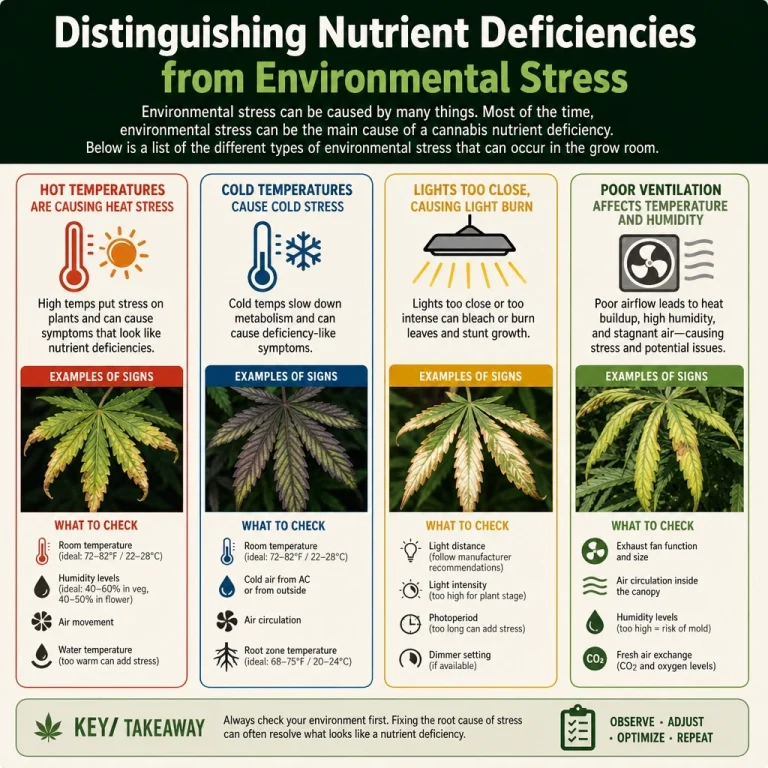
Environmental stress can be caused by many things. Most of the time, environmental stress can be the main cause of a cannabis nutrient deficiency. Below is a list of the different types of environmental stress that can occur in the grow room.
- Hot temperatures are causing heat stress
- Cold temperatures cause cold stress
- Lights too close, causing light burn
- Poor ventilation affects temperature and humidity
Common Cannabis Nutrient Deficiencies Explained
Cannabis plant nutrients are divided into two groups: micro and macro. The micronutrients, also known as primary nutrients, are nitrogen, phosphorus and potassium. These are the three numbers you will see on cannabis nutrient bottles to indicate the NPK value.
During the different stages of a cannabis plant’s lifecycle, a primary cannabis nutrient deficiency can occur and should be quickly amended. Below is a breakdown of the symptoms, causes, and solutions for cannabis nutrient deficiencies in nitrogen, phosphorus, and potassium.
Nitrogen Deficiency in Cannabis: Symptoms, Causes and Solutions
A cannabis nitrogen deficiency can be easily amended, and do not worry if you notice a few older fan leaves turning pale yellow. Nitrogen is a mobile nutrient, meaning plants can transport it from older to newer growth when needed, especially in the case of a nitrogen deficiency.
- Older fan leaves will begin to turn pale yellow
- The entire leaf will become yellow and brittle to the touch
- The foliage will have a paper-thin texture
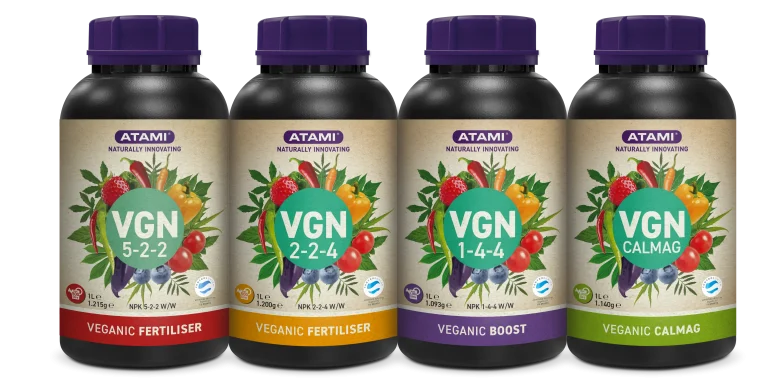
A nitrogen deficiency can occur due to underfeeding, over- or underwatering, and a pH-related issue that has caused nitrogen to be locked out of the plants. The easiest way to amend a nitrogen deficiency is to use a top dressing of Worm Delight combined with our VGN line.
Phosphorus Deficiency in Cannabis: How to Identify It
During the flowering period, cannabis plants will use the most phosphorus. Many growers experience phosphorus deficiency. Below are the signs to look out for.
- The leaves have a blue or extra dark green tint
- The stems and branches have a purple or red colour
- Older leaves produce bronze / brown spots
- The edges of the leaves will curl
- The leaflets will appear dry, crispy and burnt
- The plant’s stems will grow weak
Potassium Deficiency in Cannabis: How to Identify It
Potassium is responsible for flower production as well as many other important functions. P and K are needed in higher amounts during 12/12. Below are signs to look out for that may indicate a potassium deficiency.
- Bud development seems slow
- The edges of the leaves turn yellow
- The veins of the leaves remain green
- Stems feel weak and hollow
- Yields are lower than usual
Preventing Cannabis Nutrient Deficiency in Veganic Gardens
People often say that prevention is better than cure, and that is certainly the case when growing cannabis using veganic methods. Preventing a cannabis nutrient deficiency in the first place by maintaining healthy living soil, combined with optimal feeding practices and daily monitoring throughout the grow cycle, will be advantageous. Below are highlights on how to prevent cannabis nutrient deficiencies and keep your plants growing in full health and vigour.
Understanding which nutrients a cannabis plant requires at each stage of growth will allow you to maintain a well-balanced diet of micro- and macronutrients. There are many ways to avoid a cannabis nutrient deficiency, including proper pH management, a balanced feeding schedule, and maintaining a thriving soil food web.
Cannabis leaf symptoms are also a great indicator that your plants are telling you they are short in the nutrient department. The more familiar you are with your plants, the easier it will be to quickly identify and amend a cannabis nutrient deficiency. Get into the habit of monitoring your plants daily, carefully checking the leaves and comparing using a cannabis deficiency chart to make life as easy as possible.