Cannabis plants require a balanced diet throughout their lifecycle and providing them with veganic veg nutrients is one of the best ways to do so. Cannabis veg stage nutrients allow plants to produce leaves, stems, branches, nodes and internodes, whilst establishing a large root mass in preparation for the flowering period.
In this article, I will explain all you need to know about veganic cannabis nutrients for the vegetative stage, what veganic nutrients are for veg, essential veg stage nutrients, and how to build an effective veg nutrients cannabis schedule. As well as the best practices for building a veg stage cannabis feeding plan, common mistakes to avoid and my tips for maximising vegetative cannabis growth.
What Are Veganic Veg Nutrients for Cannabis?
During the lifecycle of a cannabis plant, there will be three stages of growth and development. They are the seedling, vegetative, and flowering stages. It is during the vegetative stage that cannabis plants focus all their energy on growing healthy, strong foliage and roots.
Below explains what the vegetative stage is, how veganic nutrient sources differ from traditional fertilisers, and outlines the benefits of using veganic veg nutrients for cannabis plants.
Understanding the Vegetative Stage
Cannabis plants will go through three different stages during their lifecycle. They are the seedling, vegetation and flowering stage. Having a thorough understanding of each stage will allow you to perfect your growing environment and create the ideal veg nutrients cannabis schedule. Below are highlights of the vegetative stage and what to expect during it.
- Cannabis plants develop leaves, branches, nodes and internodes
- The plant is not producing any flowers, and only foliage
- Indoor lighting for the vegetative stage is typically 18 hours per day
- Growers can choose how long to keep the plant in a vegetative state
- Plant training should be done during the veg stage to prevent stress
- Clones should be taken off cannabis plants when they are in the vegetative state
- Mother plants are permanently kept in vegetation
How Atami Veganic Nutrient Sources Differ from Traditional Fertilisers
Traditional organic or synthetic cannabis nutrients differ from traditional fertilisers in many ways. The following explains the main differences and why you should consider using Atami VGN.
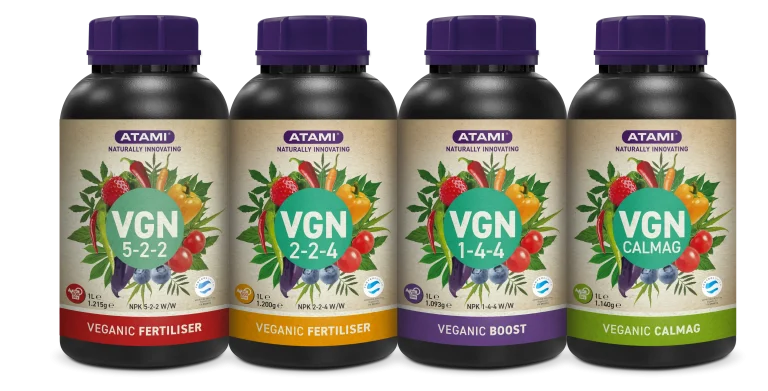
- Atami VGN is a complete 4-bottle, plant-based nutrient system
- Developed for growers who want professional results without animal-derived inputs
- VGN is made exclusively from residual plant matter
- VGN provides a high proportion of directly plant-available nutrients.
- Allows plants to access essential elements efficiently
- Works in harmony and forms a symbiotic relationship with the root zone
- Designed to support balanced nutrition throughout the entire growth cycle
- Nitrogen-free VGN CalMag, which supplies cal mag without adding extra nitrogen.
- Uses modern biodegradable chelation (IDHA) to help keep micronutrients available
- Approved as an input for organic farming by Control Union
The 5 Benefits of Using Veganic Veg Nutrients for Cannabis
1. Greater Control and Faster Response
VGN provides a high level of directly plant-available nutrients, and growers can respond more quickly when correcting nutrient imbalances or deficiencies. This reduces uncertainty and helps plants recover efficiently, giving growers more confidence in their feeding decisions.
2. Clean, Ethical Cultivation
Made exclusively from residual plant matter and free from animal-derived inputs, VGN allows growers to align their cultivation practices with plant-based and sustainability values. This provides peace of mind about what they are using in their growing environment.
3. Balanced, Natural Plant Development
Designed to work in harmony with soil biology, VGN supports steady, balanced nutrition across the entire plant cycle. Growers experience cleaner development, improved aroma and flavour expression, and more consistent results without forcing growth.
4. Simplicity with Professional Standards
The structured 4-bottle system, clear grow guide, and predictable feeding program reduce guesswork. This makes the growing process more organised, efficient, and manageable, even for those new to veganic nutrition.
5. Confidence Through Certification & Transparency
Approval as an input for organic farming by Control Union, along with sustainable sourcing and recyclable packaging provides reassurance that the product meets high standards of quality, safety, and environmental responsibility.
Essential Cannabis Veg Stage Nutrients for Healthy Plant Growth
We all want to grow lush, green, and robust plants capable of producing excellent yields, so providing the essential nutrients for the cannabis veg stage is key. These include micro- and macronutrients such as nitrogen, phosphorus, and potassium, which are responsible for healthy growth during the veg stage.
Below explains the importance of nitrogen during vegetative growth, the secondary and trace elements your plants require, and recognising nutrient deficiencies in the veg stage.
The Importance of Nitrogen During Vegetative Growth
Nitrogen is one of the most used cannabis plant nutrients and an essential part of the vegetative period.
- Nitrogen produces leaf and stem development
- Nitrogen is required for plants to produce chlorophyll
- Required for photosynthesis and absorbing light
- Nitrogen is needed to convert sugars and starches
- Nitrogen levels will determine how green and healthy the leaves are
- Plants need nitrogen to create amino acids and for cell division
Secondary Nutrients and Micronutrients Cannabis Plants Need
Cannabis nutrients are split into two groups: micro and macro. The list below covers the full range of nutrients cannabis plants need.
Macro Nutrients
- Nitrogen
- Phosphorus
- Potassium
Secondary Macro Nutrients
- Calcium
- Magnesium
- Sulphur
Micronutrients
- Boron
- Copper
- Iron
- Manganese
- Zinc
- Molybdenum
Recognising Nutrient Deficiencies in the Vegetative Stage
One way to tell if your cannabis plants are suffering from a nutrient deficiency during the veg stage is to monitor and check the weed leaf appearance. Cannabis plants will tell you all you need to know.
How to Build an Effective Veg Stage Feeding Cannabis Plan
Cannabis plants love consistency, and one way to guarantee consistency is to build and develop an effective veg-stage feeding cannabis plan. The more in control you are of your feeding schedule, the more advantage you have.
Below is a breakdown of when to start feeding your cannabis plants, how to properly adjust nutrient strength throughout the vegetative stage, and watering practices that support healthy nutrient uptake.
When to Start Feeding Young Cannabis Plants
Creating a veg nutrients cannabis feeding schedule for young plants will allow you to give your cannabis plants the best start in life. Cannabis plants during the first 2 weeks of growth do not require much light or nutrients. Only feed your cannabis plants from the start of week 3 onwards, and I recommend following the nutrient brand’s feeding chart.
Adjusting Feed Strength Throughout the Vegetative Stage
As your cannabis plants grow, they will demand more nutrients to aid their development. Veg stage feeding for cannabis should be systematic and as consistent as possible.
- Follow the ml/L nutrient guideline when adjusting the strength
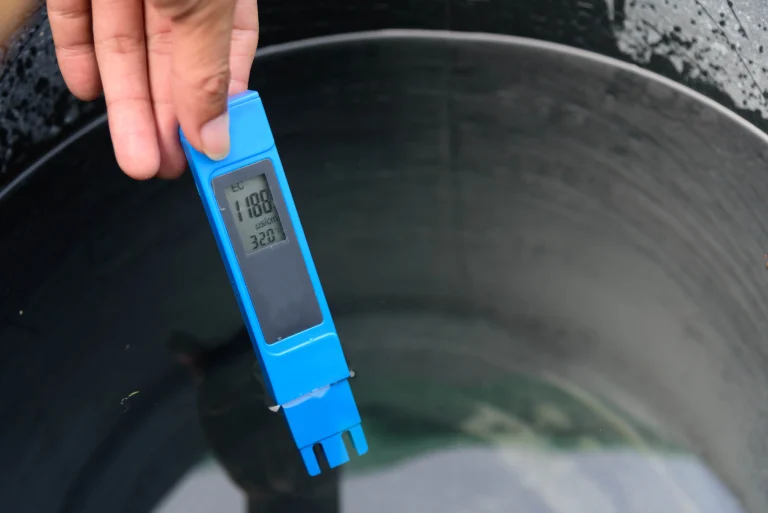
- Hydroponic growers will need to use an EC meter to check
- Check the leaves of the plant to monitor health and deficiencies
- Do not overfertilise plants by giving them too many nutrients
Watering Practices That Support Healthy Nutrient Uptake
How often you water your plants plays a massive role in how well they grow and flower, and in plant health and yield. Over- or underwatering cannabis plants is one of the most common mistakes a grower can make. Below are highlights on when to water your cannabis plants.
- The pot should feel light and easy to lift off the floor
- The soil should be close to dry and have a dusty appearance
- You can insert your finger down the side to check moisture levels
- It is best to water your plants at the same time every day
- Using a measuring container will allow you to be consistent
Best Practices for Using Nutrients for the Vegetative Stage of Cannabis
Monitoring your plants, grow room environment, and nutrients correctly will make a massive difference in your crop’s quality. Feeding your plants doesn’t just mean stirring in the nutrients. Correct pH and EC management are the key to ensuring optimal nutrient uptake and availability.
Below covers the importance of monitoring your pH and EC when making a nutrient solution, the most common feeding mistakes home growers make during the veg period and my tips for maximising growth with veganic veg nutrients for cannabis.
Monitoring pH and EC for Optimal Nutrient Availability
pH refers to how acidic, alkaline or neutral a water source or nutrient solution is. Cannabis plants require a very specific pH range to access, absorb, and use available nutrients. If the nutrient solution is outside the ranges below, cannabis plants will experience nutrient lockout and be unable to access nutrients.
- Soil pH should be between 6.0 and 7.0
- Hydroponics should be between 5.5 and 6.5
EC refers to electrical conductivity and how weak or strong a nutrient solution is. During the different stages of a cannabis plant’s lifecycle, growers will need to adjust the nutrient strength in accordance with how fast the plants grow. Giving your plants too many nutrients will cause overfertilisation and nutrient burn.
Avoiding Common Feeding Mistakes in Veg
It can be easy to make a mistake when growing cannabis during the vegetative stage.
Below are some of the most common feeding mistakes to avoid
- Not following the recommended nutrient guideline
- Feeling high EC levels when the plants are too young
- Not checking the pH of the nutrient solution
- Not recognising cannabis leaf symptoms
- Underfeeding your plants causes nutrient deficiencies